

The Backyard Recovery Space: Why High-Performers AreBuilding Wellness Cabins at Home
Biohacking + nervous system + performance — a brutal overview of how we live
Table of Contents:
The Home Recovery Paradox
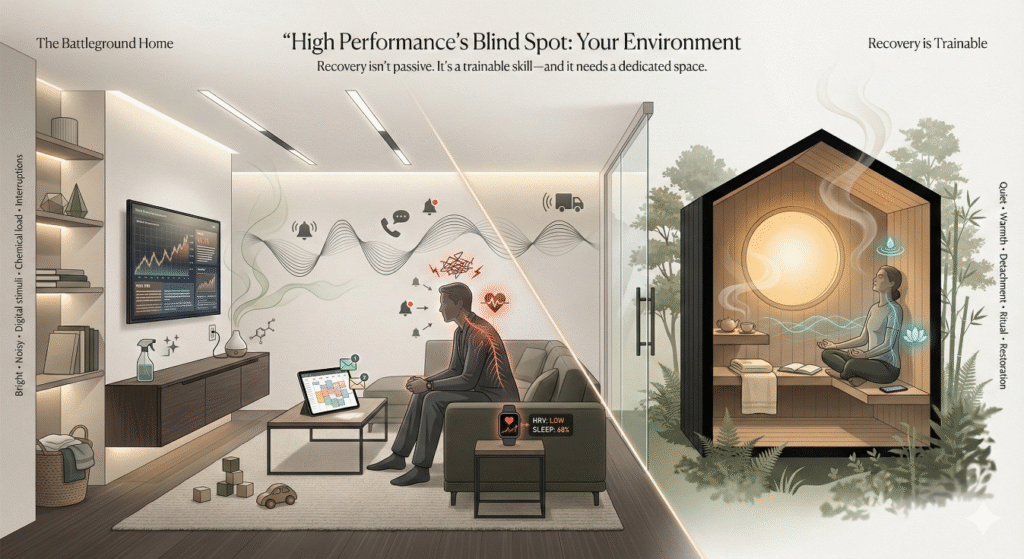
Most sophisticated executives and high-performers understand something their peers miss: recovery isn’t passive. It’s a trainable skill requiring dedicated practice space. But our homes, designed for convenience and aesthetics, rarely support this. Instead, they bombard us with stressors, dilute our focus, and prevent the psychological detachment essential for neurological recovery.
The Science Behind Recovery Spaces
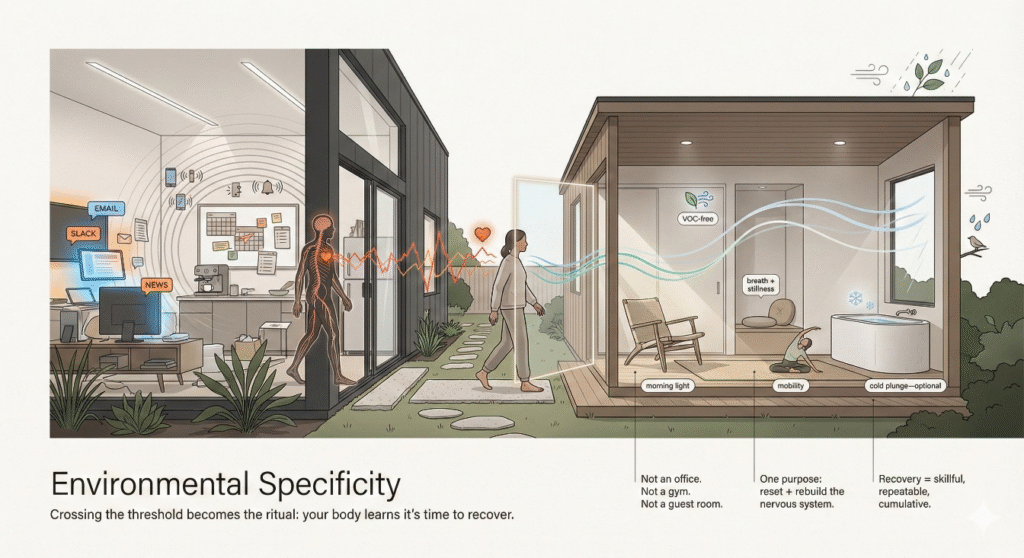
Psychological detachment from work—a proven predictor of well-being—becomes elusive when every room carries the residue of meetings, notifications, and multitasking. For parents, the challenge multiplies: the beautiful chaos of family life means every corner of the house is charged with activity, leaving little space for restoration.
In regions like Connecticut, where the housing stock is old, even luxury homes often fail to provide safety from environmental toxins and chronic stressors. The construction industry’s emphasis on cost and speed over human health means many homeowners unknowingly accept environments that undermine their well-being. The emerging solution: a new class of homeowner who demands natural materials, ethical building, and, above all, environments that actively support recovery.
Environmental Specificity: The Secret to Advanced Recovery
Envisioning Your Recovery Architecture
There is room for gentle stretching or a cold plunge if you desire. But there are no ambiguous functions—no clutter, no screens, no reminders of unfinished business. This is not where you sleep, but where you practice transitioning into deep rest. Here, recovery is not accidental; it’s skillful, repeatable, and cumulative.
The ROMA Example: Purpose-Built Recovery Architecture
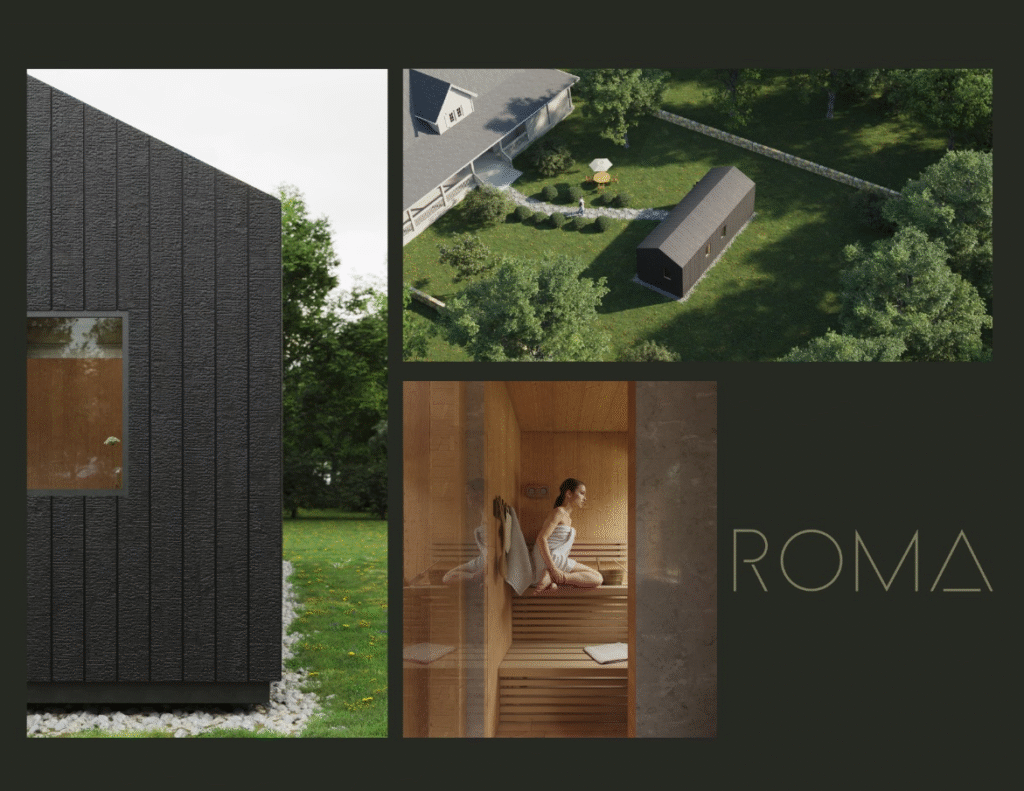
- Material Purity: Only natural materials are used, eliminating off-gassing chemicals and synthetic compounds that trigger inflammatory responses.
- Acoustic Sanctuary: Structures are engineered for sound absorption, enhancing the experience of natural sounds and minimizing mechanical noise.
- Light Intelligence: Daylighting is optimized, and supplemental lighting supports healthy circadian rhythms.
- Electromagnetic Hygiene: Low-EMF construction and hardwired connectivity reduce chronic electromagnetic exposure.
- Spatial Clarity: The cabin is visually uncluttered, with every element serving recovery—no competing purposes or psychological ambiguity.
Multi-Dimensional Utility
- Aging Parents: Older adults benefit from clean air and acoustic quiet, supporting respiratory health and sleep quality. The separate space preserves autonomy.
- Adult Children: Young adults in transition use the cabin as a supportive, healthenhancing environment, distinct from luxury amenities but crucial for resilience.
- Guest Accommodation: Visitors experience superior rest, often surpassing that of luxury hotels, making the cabin a point of distinction.
- Rental Income: Health-conscious tenants pay premiums for wellness-oriented environments. While income is not the primary motivation, it provides additional flexibility
The Investment Framework: Technical Comparison (Conventional ADU vs. Wellness Cabin)
Option ADUs: on average, of $180K initial investment, but with hidden long-term costs: increased healthcare expenses, gradual loss of cognitive and physical performance, higher risk of career stagnation, and an accelerated path toward burnout.
A Shift in Luxury: From Having to Being
Conclusion: The Infrastructure of Vitality
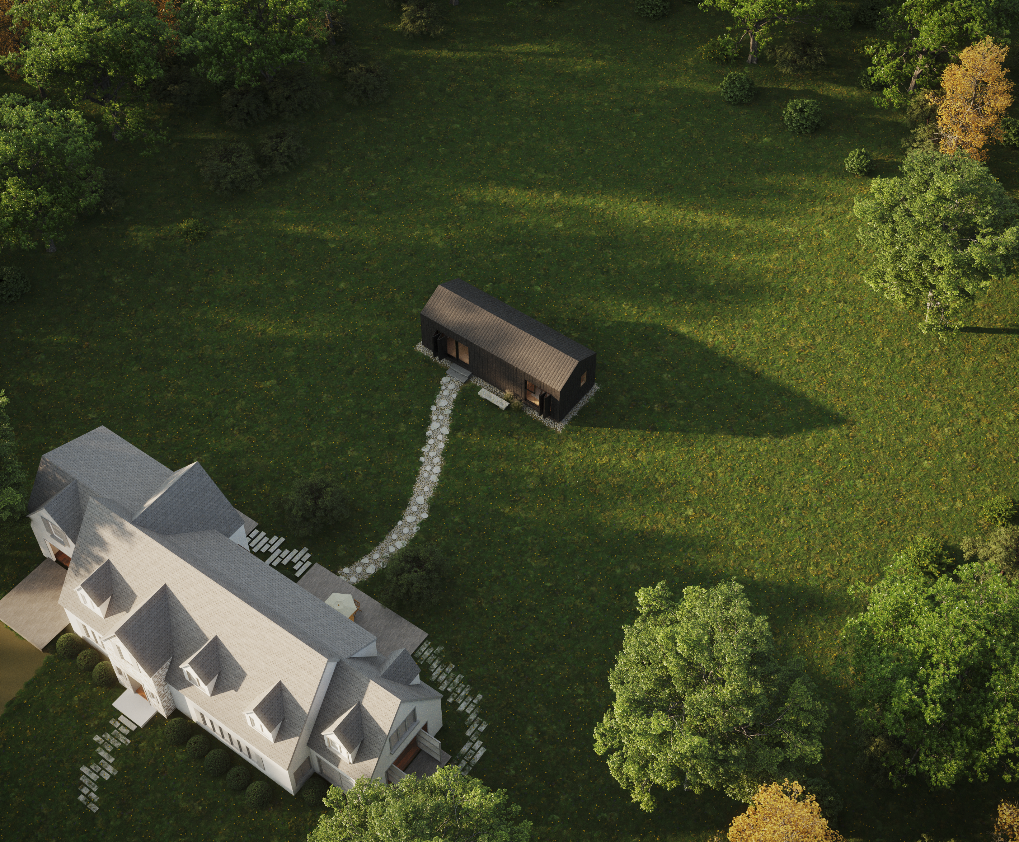
Homes are already infrastructure for living and socializing, but most lack infrastructure for recovery. For high performers, a backyard wellness cabin is not a luxury—it is a necessity. Neuroscience confirms that restorative environments replenish psychological resources and enhance attention and performance. The real question is not whether dedicated recovery space works—the research is unequivocal—but whether individuals are astute enough to invest in infrastructure that sustains their future performance. Connecticut’s most informed homeowners are building this infrastructure now—not for trendiness, but because it works. They are designing sanctuaries that transform recovery from aspiration into practice, signaling an understanding that what sustains performance tomorrow is not past achievement, but ongoing investment in well-being.
For Connecticut Homeowners Considering Wellness Cabins:
Selected References:
- Bains, J. S., et al. (2015). Stress and resilience: Neural mechanisms of adaptation. Nature Reviews Neuroscience
- Karatsoreos, I. N., & McEwen, B. S. (2011). The neuroscience of resilience. Journal of the Society for Social Work and Research, 9(2).
- Skiöld, M., & Nilsson, S. (2024). Beneath the trees: Investigating the stress-reduction potential of nature exposure. Cognitive Neuroscience Thesis, University of Gothenburg.
- Ulrich, R. S., et al. (1991). Stress recovery during exposure to natural and urban environments. Journal of Environmental Psychology, 11(3), 201-230.
- Yeon, P., et al. (2021). Effects of restorative environments on mental health and its cognitive neural mechanisms. Frontiers in Forests and Global Change.