

Do wellness cabins increase property value? The complete guide
Why Health-Optimized ADUs Command Premium Pricing in Today’s Real Estate Market
Table of Contents:
What Is a Wellness Cabin?
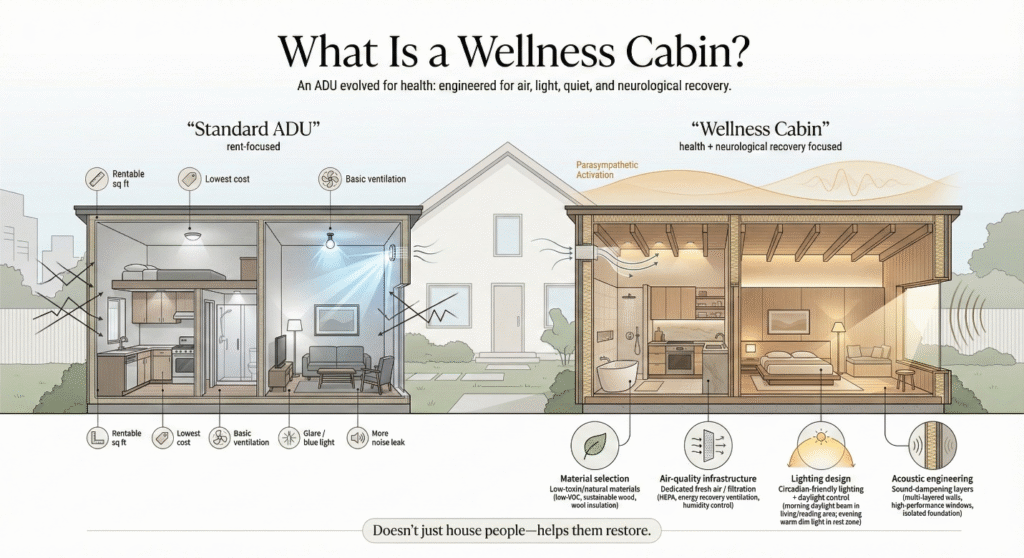
However, they differ significantly in material selection, air-quality infrastructure, lighting design, and acoustic engineering. The result? A structure that doesn’t just house people—it actively enhances their health and performance.
Why Homeowners Are Adding Wellness Cabins
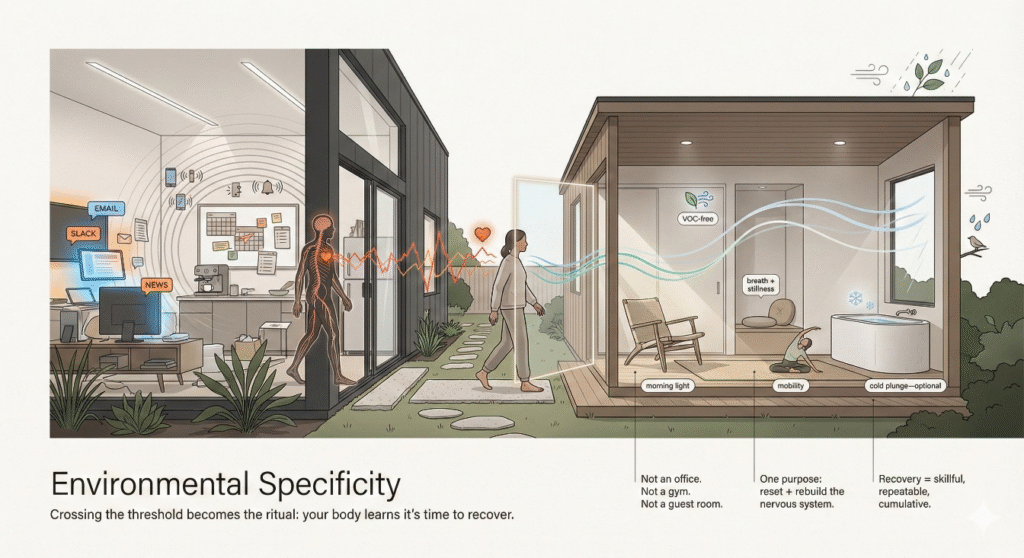
The Primary Use: Personal Recovery Training
A wellness cabin solves this through spatial separation and environmental optimization. It becomes a dedicated recovery gym where you practice the most neglected skill in high performance: downshifting from sympathetic (fight-or-flight) to parasympathetic (rest-and-digest) nervous system activation.
Multi-Generational Wellness Housing
For Aging Parents:
For Adult Children:
Premium Guest Accommodation:
Strategic Rental Income:
Home Office for Cognitive Performance:
How Wellness Cabins Impact Property Value
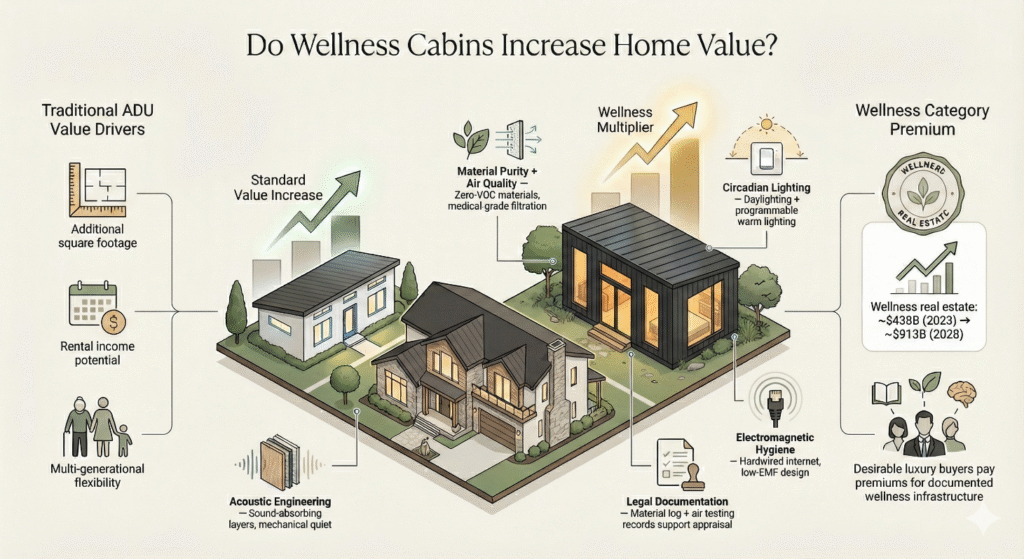
Do Wellness Cabins Increase Home Value?
- Additional square footage
- Rental income potential
- Multi-generational housing flexibility
Research indicates wellness real estate was valued at approximately $438 billion globally in 2023, with projections approaching $913 billion by 2028. Properties with documented wellness infrastructure attract educated, health-conscious buyers willing to pay significant premiums for features they understand enhance longevity and performance.
Factors That Influence Wellness Cabin Value
- Material Purity and Air Quality: Zero-VOC materials, medical-grade filtration, and natural finishes distinguish wellness cabins from their traditional counterparts.
- Circadian Lighting: Integrated daylighting and programmable systems support healthy sleep and mood regulation
- Acoustic Engineering: Sound-absorbing materials and mechanical quietude allow the nervous system to rest.
- Electromagnetic Hygiene: Hardwired internet and low-EMF design minimize biological stressors.
- Legal Documentation: Meticulous records of materials and air quality testing serve as evidence of superior construction, supporting higher appraisals and resale value.
How Sophisticated Buyers Perceive Wellness Cabins
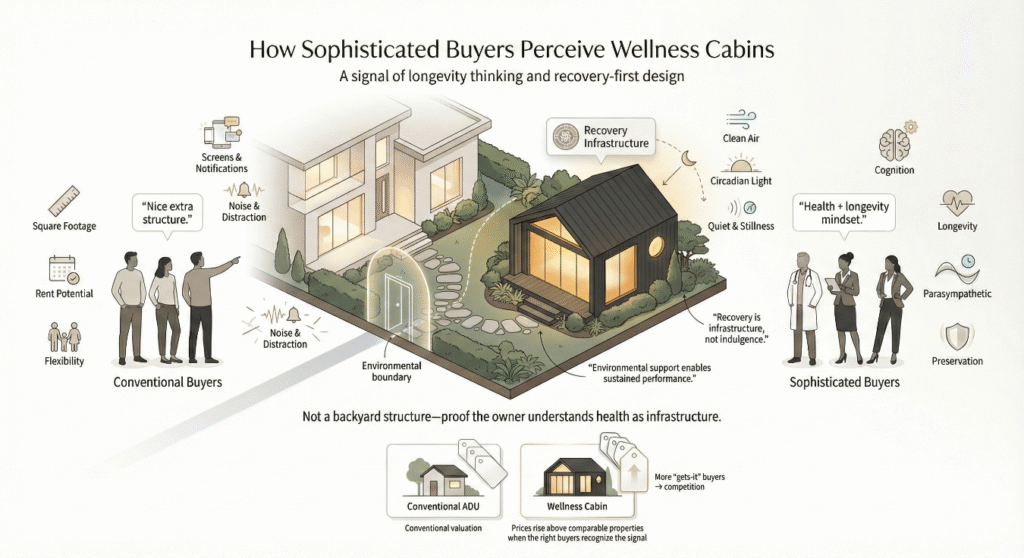
It’s not about having a backyard structure. It’s about demonstrating understanding that recovery is infrastructure, not indulgence—that health preservation requires environmental support, not just personal discipline. This perception creates bidding competition among buyers who “get it,” driving prices above comparable properties with conventional ADUs.
Investment Analysis: Wellness Cabin vs. Conventional ADU
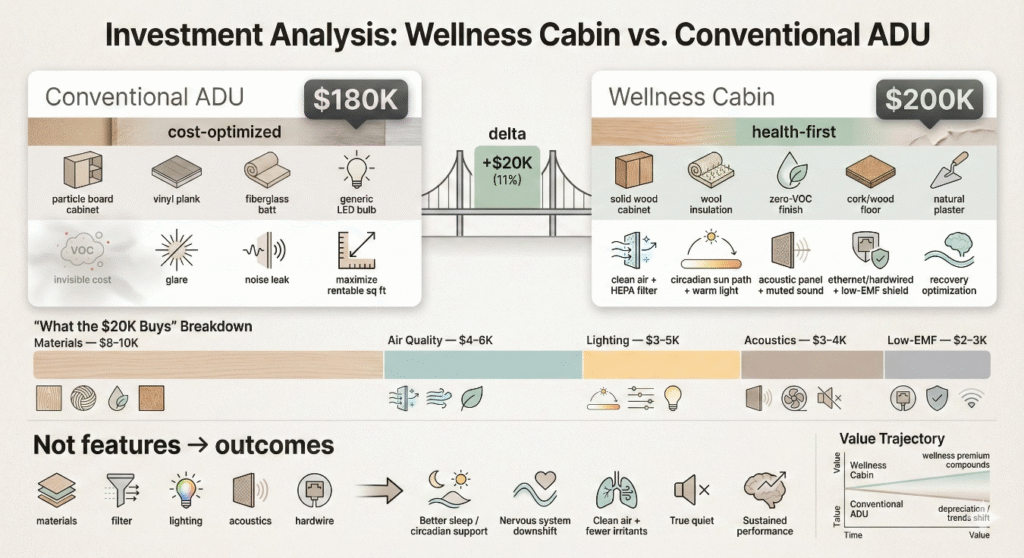
- Average investment: $180,000
- Material selection: Cost-optimized (particle board, standard insulation, vinyl, generic LEDs)
- Air quality: Standard HVAC with basic filtration
- Lighting: Generic LED fixtures optimized for cost
- Acoustic design: Basic insulation, standard construction
- Primary focus: Maximizing rentable square footage
- Hidden health costs: Off-gassing VOCs, poor air quality, circadian disruption
- Depreciation: Begins immediately as materials age and design trends shift
- Buyer appeal: General ADU market
Wellness Cabin Construction:
- Starting investment: $200,000
- Incremental cost over conventional: $20,000 (11% premium)
- Material selection: Health-first (solid hardwoods, natural oils, zero-VOC finishes)
- Air quality: Medical-grade filtration, passive air design, breathable materials
- Lighting: Circadian-optimized architectural daylighting plus supplemental systems
- Acoustic design: Engineered sound absorption, near-silent mechanical systems
- Primary focus: Neurological recovery optimization and health preservation
- Hidden returns: Measurable performance enhancement, health preservation, longevity
- Appreciation: Value increases as wellness awareness compounds in the luxury market
- Buyer appeal: Health-conscious, high-net-worth segment willing to pay premiums
The True Cost Analysis
- Solid hardwood vs. particle board cabinetry
- Natural wool insulation vs. fiberglass
- Zero-VOC paints vs. standard finishes
- Cork or natural wood flooring vs. vinyl
- Natural plaster vs. standard drywall
- Medical-grade HEPA filtration vs. standard HVAC filters
- Passive ventilation design vs. mechanical-only approach
- Air quality monitoring systems
- Humidity regulation through natural materials
- Circadian-optimized fixtures vs. generic LEDs
- Architectural daylighting design vs. standard windows
- Programmable color temperature systems
- Natural light maximization through strategic positioning
- Sound-absorbing material specification vs. basic insulation
- Acoustic isolation in mechanical systems
- Structural sound dampening
- Near-silent HVAC specification
- Hardwired networking infrastructure vs. Wi-Fi only
- Strategic electrical shielding
- Low-EMF mechanical systems
- Deliberate technology zoning
Legal and Zoning Considerations for Wellness Cabins
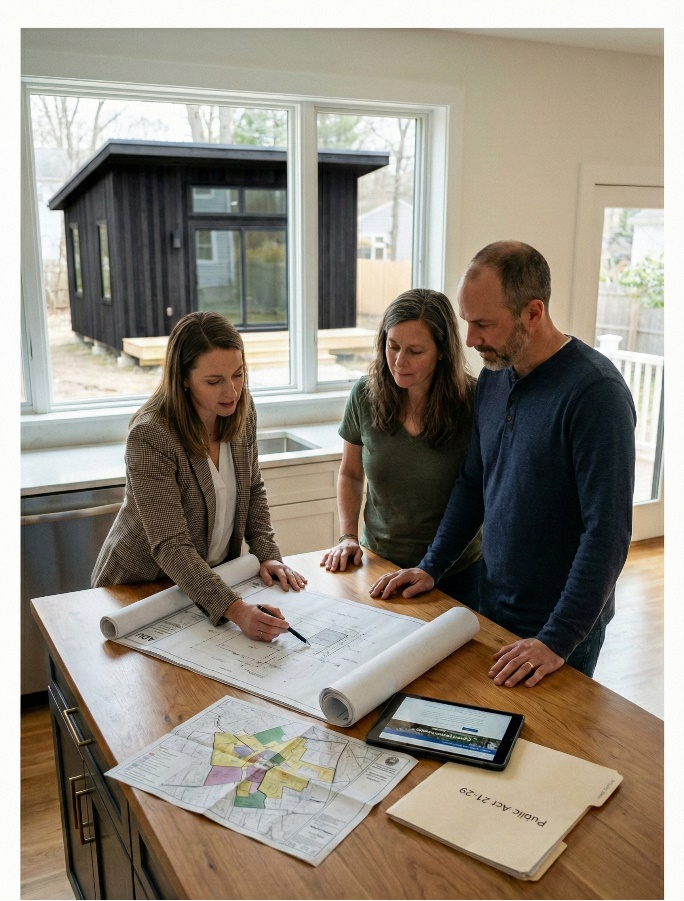
The True Cost Analysis:
Size Limitations: Most Connecticut municipalities limit ADUs to 1,000-1,500 square feet. Wellness cabins optimize within these constraints, prioritizing quality over quantity.
Setback Requirements: Distance from property lines varies by municipality. Detached wellness cabins must meet these requirements, which affect site planning.
Parking Requirements: Most regulations require 1-2 parking spaces per ADU. Wellness cabins benefit from typically housing single occupants (yourself, aging parent, or premium tenant), minimizing parking concerns.
Design Standards: Some municipalities impose architectural compatibility requirements. Wellness cabins’ natural materials and timeless design typically satisfy these standards more easily than trendy conventional construction.
Financing Wellness Cabins
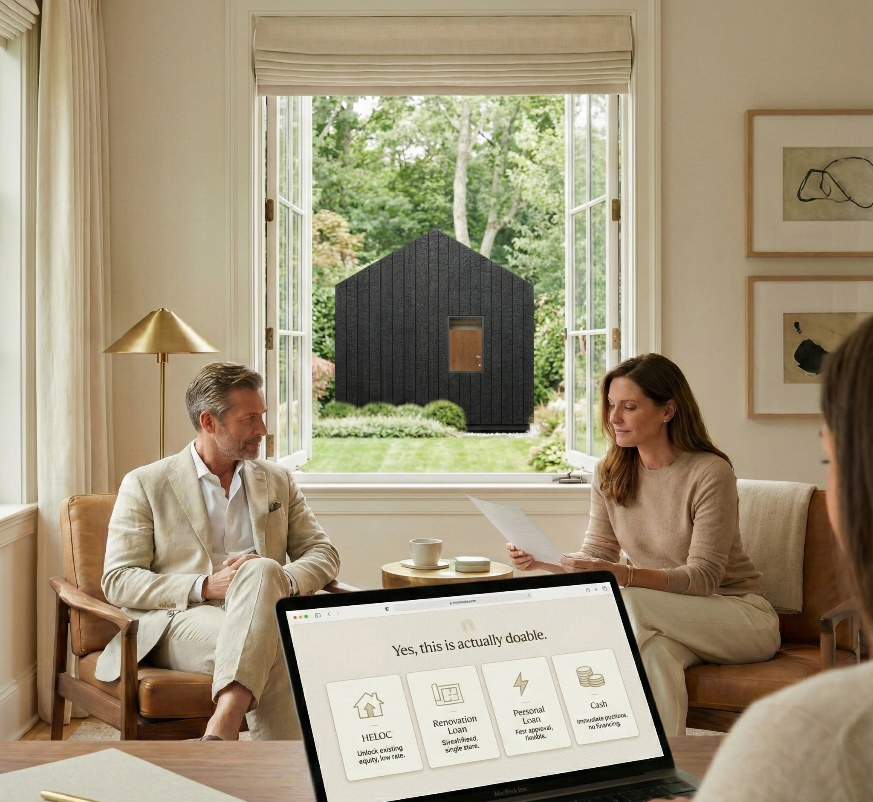
Construction-to-Permanent Loans: These two-stage loans work well for wellness cabins, allowing you to finance construction and convert to a mortgage upon completion.Wellness cabins optimize within these constraints, prioritizing quality over quantity.
Home Equity Lines of Credit (HELOC): Flexible option for homeowners with significant equity. Draw funds as needed during construction, convert to a fixed-rate loan after completion.
Green Building Loans: MSome lenders offer favorable terms for structures that meet energy-efficiency and environmental-health standards—criteria that wellness cabins often satisfy.
Portfolio Lenders: Private banks and credit unions sometimes offer more flexible terms for unique properties like wellness cabins, recognizing their appeal to affluent, health-conscious borrowers.
Cash Construction: Many homeowners building wellness cabins pay cash, viewing the expense as health infrastructure rather than debt-financed real estate. This avoids interest costs and simplifies the process.
Appraising Properties with Wellness Cabins
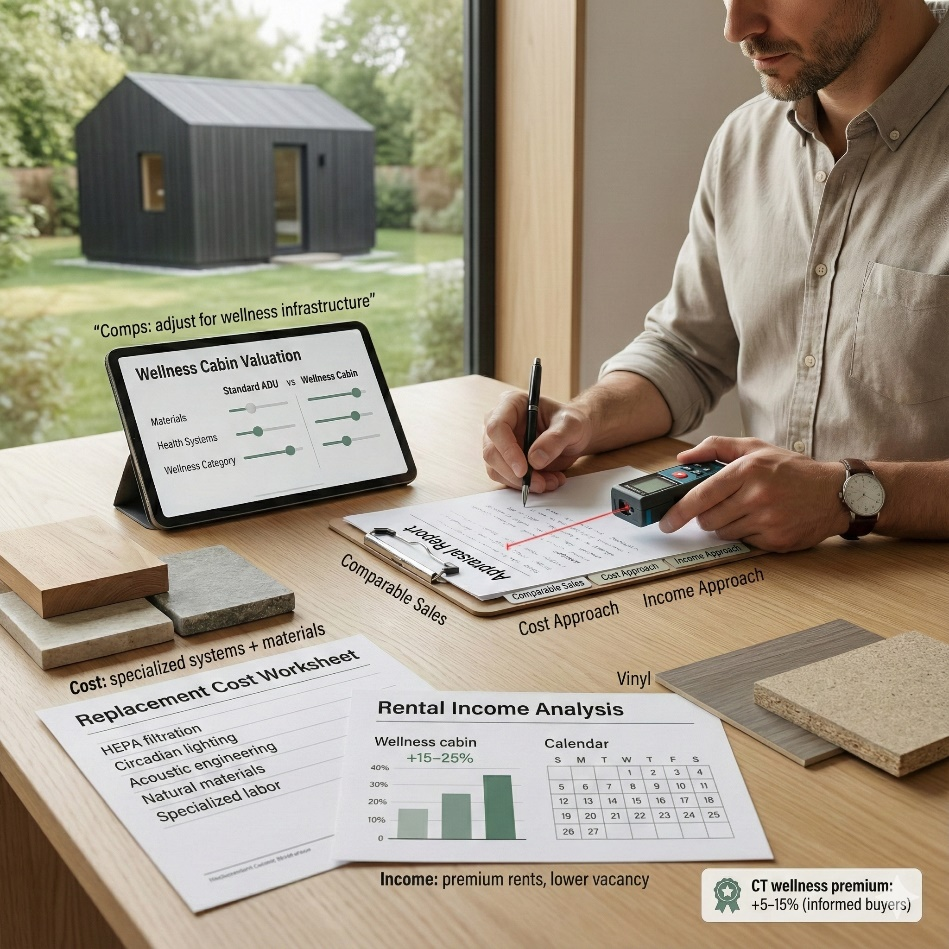
How Appraisers Value Wellness Cabins
- Standard ADU vs. wellness-optimized ADU
- Material quality differential
- Health infrastructure systems
- Market positioning in the wellness real estate category
- Medical-grade air filtration systems
- Circadian lighting infrastructure
- Acoustic engineering components
- Premium natural material costs
- Specialized labor for health-focused construction
- 15-25% higher than conventional ADU rentals
- Lower vacancy rates due to demand from health-conscious tenants
- Longer average tenancy reducing turnover costs
- Premium tenant quality commanding more stable income streams
The Future of Wellness Cabins in Real Estate
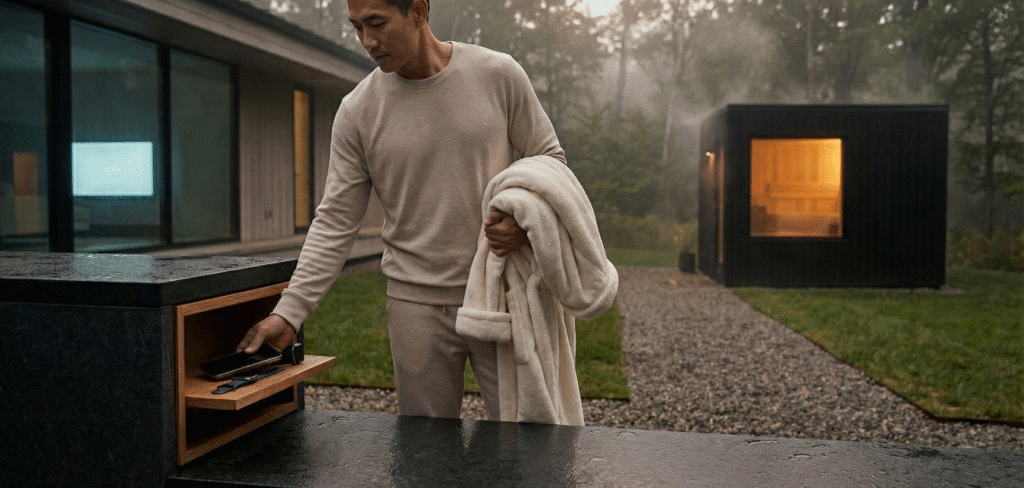
Are Wellness Cabins the Future of Performance Infrastructure?
The problem isn’t work intensity—it’s recovery insufficiency. And recovery insufficiency stems partly from environments that work against rather than support neurological restoration.
Wellness cabins represent infrastructure investment in sustained high performance. As this understanding spreads through professional networks, demand will accelerate beyond the general ADU market growth rate.
Emerging Trends in Wellness Cabin Design
The wellness cabin market is evolving rapidly:
Prefabricated Wellness Modules: Companies are developing prefabricated wellness cabin systems that can be installed in days while maintaining health-first material standards and environmental optimization. This reduces construction timelines and costs while ensuring quality control.
Integration with Wearable Health Technology: Future wellness cabins may integrate with wearable devices to optimize environmental conditions based on real-time biometric data—adjusting lighting for circadian phase, modulating temperature for sleep optimization, and managing air quality for respiratory function.
Biophilic Design Evolution: Moving beyond adding plants to interiors, next-generation wellness cabins integrate deeper biophilic principles—natural fractals in visual design, circadian-appropriate color palettes, and acoustic environments that mimic natural soundscapes.
Cold Plunge and Thermal Therapy Integration: As awareness of the benefits of temperature therapy grows, wellness cabins increasingly incorporate cold plunge pools, infrared saunas, and contrast therapy facilities as core recovery infrastructure rather than luxury add-ons.
Meditation and Breathwork Optimization: Purpose-built spaces for contemplative practices, with acoustic isolation, appropriate lighting, and environmental conditions specifically supporting parasympathetic activation.
Case Study: ROMA Wellness Cabins
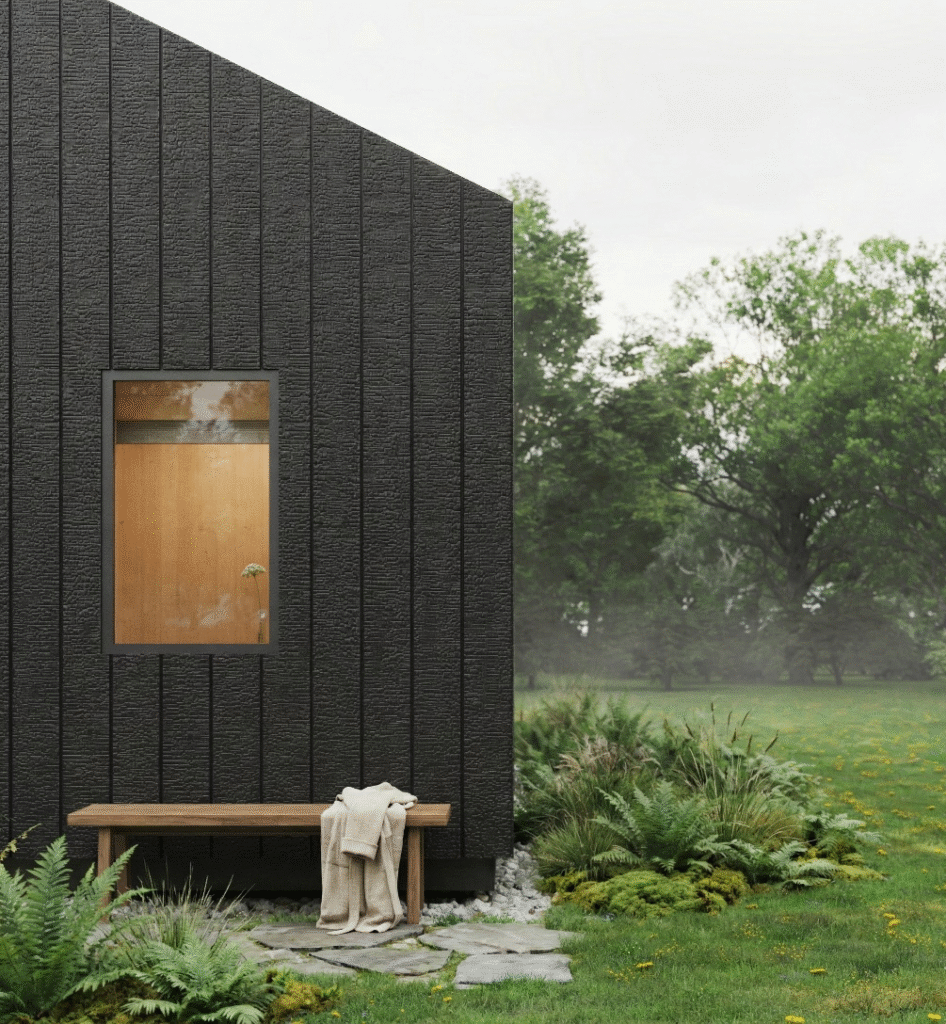
Purpose-Built Recovery Architecture
ROMA (buildroma.com) exemplifies the wellness cabin approach: structures designed from first principles around human recovery needs rather than adapted from conventional construction.
Rather than asking “How can we add wellness features to standard ADU construction?” ROMA asks, “What would a structure look like if supporting nervous system recovery was the primary design constraint?”
The ROMA Approach:
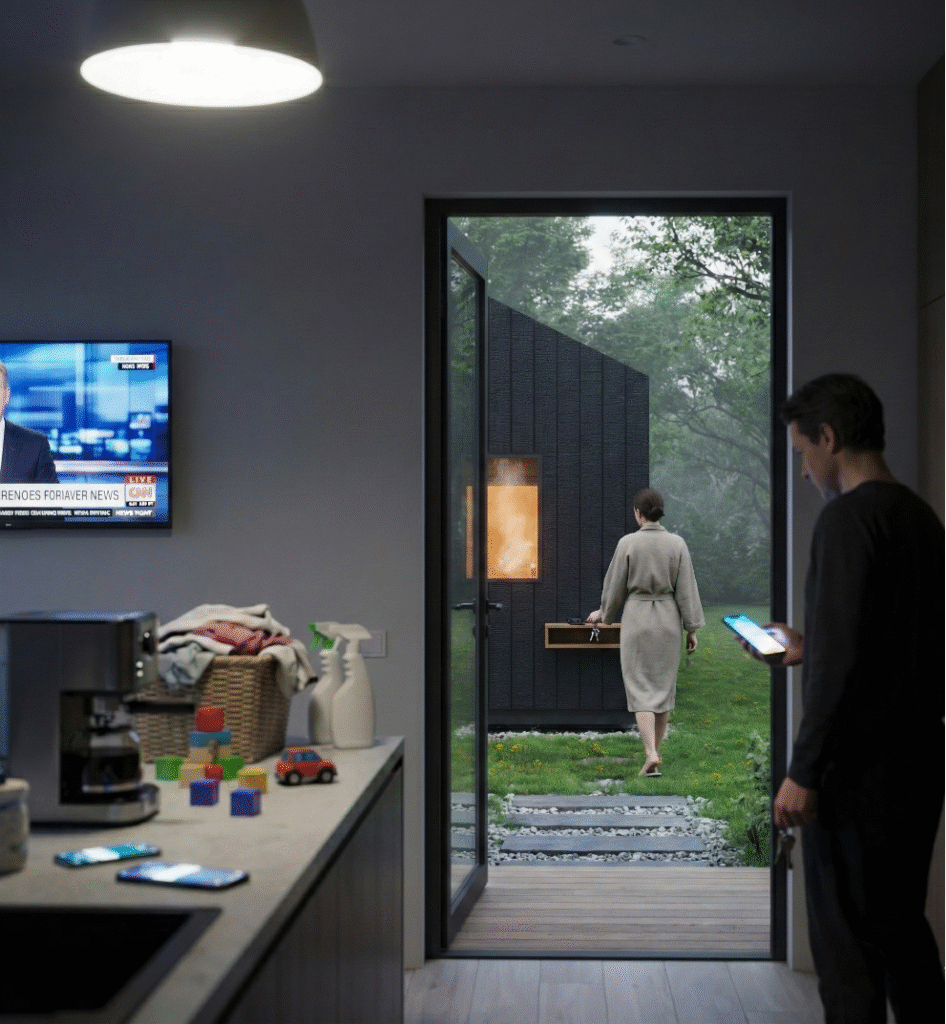
Material Purity as Standard: No off-gassing chemicals, no synthetic materials releasing VOCs. Every material is selected for its health impact first, aesthetic second. The air inside remains chemically neutral, reducing unconscious inflammatory responses and allowing the respiratory system to function optimally.
Acoustic Sanctuary Engineering: Structure and material selection prioritize sound absorption over cost optimization. Inside a ROMA cabin, you hear wind, rain, birds—not mechanical hum, traffic drone, or electronic interference. This acoustic environment allows the nervous system to disengage from hypervigilance.
Circadian Light Intelligence: Architectural daylighting maximizes natural light exposure throughout the day. Supplemental lighting follows circadian principles—full-spectrum morning exposure, warm evening transitions, and the ability to achieve complete darkness. Your biology receives consistent, appropriate signals.
Electromagnetic Hygiene: Hardwired connectivity where needed; low EMF everywhere else. Your nervous system rests from constant electromagnetic exposure, allowing cellular repair processes to function without interference.
Spatial Clarity: Every element serves recovery. No visual clutter, no competing purposes, no psychological ambiguity about the space’s function. Your brain learns: this place equals restoration.
Conclusion: Are Wellness Cabins Worth It?
Weighing the Investment
After analyzing hundreds of properties and observing the evolution of Connecticut’s luxury real estate market, the evidence supports wellness cabins as sound investments for the right homeowners.
Financial Returns:
- Property value increases: 70-90% of construction cost
- Rental income premiums: 15-25% above conventional ADUs
- Tenant quality: Superior reliability and property care
- Market positioning: Emerging category with accelerating demand
- Resale advantage: Appeals to the most desirable buyer segment
Health Returns:
- Measurable sleep improvement
- Cognitive performance enhancement
- Stress recovery acceleration
- Career longevity extension
- Quality of life elevation
The Ultimate ROI: For high-earning professionals, the question isn’t whether wellness cabins justify their cost. The question is whether you can afford NOT to invest in infrastructure that determines how long you can sustain peak performance.
Frequently Asked Questions
Q: How much does a wellness cabin increase property value?
A: Wellness cabins typically add 70-90% of construction cost to property value immediately, with the percentage increasing over time as wellness real estate awareness grows. In health-conscious markets, properties with documented wellness infrastructure command 5-15% premiums over comparable properties with conventional ADUs.
Q: Can I use my wellness cabin for rental income?
A: Yes, wellness cabins generate rental income 15-25% higher than conventional ADUs, with superior tenant quality and longer average tenancy. Verify local regulations regarding rental restrictions, particularly for short-term wellness retreat rentals.
Q: Do wellness cabins require special permits beyond standard ADUs?
A: No special permits required, though maintaining documentation of material specifications, air quality testing, and health-optimized systems supports value differentiation during appraisal and can facilitate financing.
Q: How long does wellness cabin construction take?
A: Typical timeline: 9-13 months from initial planning to occupancy, including design (4-8 weeks), permitting (8-12 weeks), construction (5-7 months), and final refinement (2-3 weeks). Prefabricated wellness cabins can reduce this to 4-8 months.
Q: What’s the minimum lot size for a wellness cabin?
A: Requirements vary by municipality, but most Connecticut towns require 7,500-10,000 square feet minimum for detached ADUs. Consult local zoning regulations for specific requirements.
Q: Can I finance a wellness cabin?
A: Yes, through multiple options: construction-to-permanent loans, home equity lines of credit, cash-out refinancing, or specialized green building loans. Some lenders offer favorable terms that recognize the appeal of wellness real estate.
Q: What maintenance does a wellness cabin require?
A: Regular air filter replacement (every 6-12 months), periodic HVAC system maintenance, natural material care (wood oils, stone sealing), and indoor air quality monitoring. Generally, it requires less maintenance than conventional construction due to durable natural materials.
Q: How do wellness cabins differ from conventional ADUs?
A: Fundamental difference: wellness cabins prioritize health optimization in every design decision (materials, air quality, lighting, acoustics, EMF) while conventional ADUs prioritize cost efficiency and rentable square footage.
Q: Are wellness cabins worth the premium over conventional ADUs?
A: For high-earning professionals ($200K+), the performance enhancement and health preservation returns typically exceed the incremental investment within 1-3 years. The compounding benefits over a career justify the premium for those who understand recovery as infrastructure.
Q: What if I move—will buyers value a wellness cabin?
A: Increasingly, yes. Health-conscious, educated buyers—the most desirable market segment—actively seek properties with wellness infrastructure and pay premiums for documented environmental quality. As wellness awareness grows, this trend accelerates.