

Table of Contents:
THE SAFE HOME MYTH
What changed? And more importantly, what can we do about it?
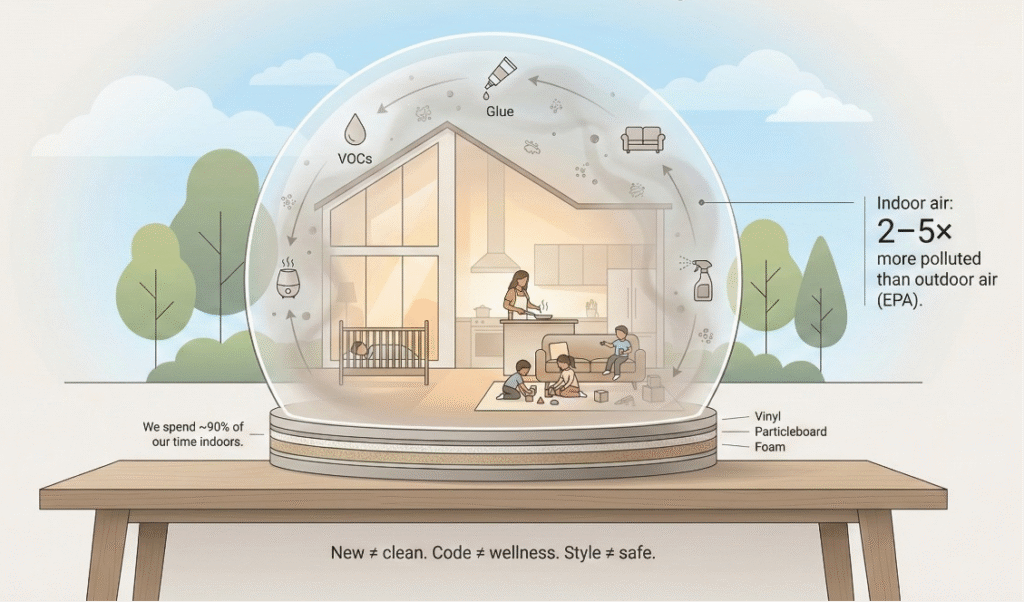
We grow up believing our homes are safe.
They’re where we retreat when the world feels chaotic. Where we heal from sickness, raise our children, sleep, eat, and restore. The place we spend 90% of our time. The refuge we return to every single night.
But what if I told you that the very walls you live within—day after day, year after year—are slowly, invisibly harming you?
This is the myth of the modern home: that new means clean, that code means safe, and that style means wellness.
It’s not your fault you didn’t know. Most people don’t. Because the systems that build, sell, and regulate homes rarely talk about health. They talk about energy efficiency, resale value, and square footage. Rarely do they talk about what your walls are made of—or what’s in the air you breathe while lying in bed at night.
And yet, the evidence is everywhere. Indoor air is often 2 to 5 times more polluted than outdoor air, according to the EPA. Chronic illnesses like asthma, autoimmune disorders, and fatigue syndromes are on the rise—and many of them are linked to the built environment we’ve created.
THE CHEMICAL REVOLUTION NO ONE ASKED FOR
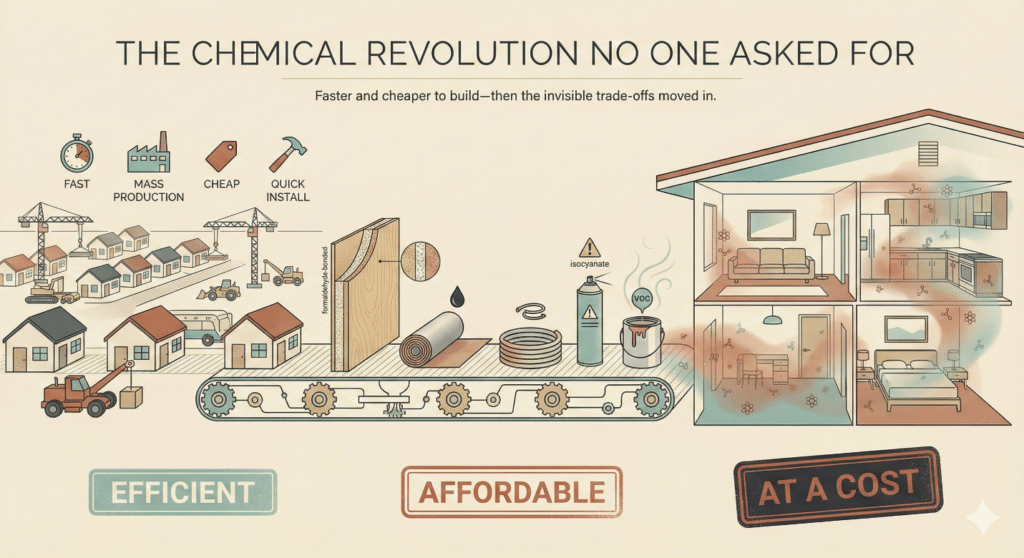
After World War II, America experienced a building boom unlike anything in history. Suburbs sprawled across the landscape. Housing demand exploded. Materials had to be mass-produced, quick to install, and cheap.
This led to the widespread adoption of synthetic chemicals in construction: engineered wood products bonded with formaldehyde, vinyl flooring made from petroleum, plastic pipes, foamed insulation containing toxic isocyanates, and paints containing volatile organic compounds.
These materials revolutionized construction, making homes faster and cheaper to build. But they also introduced a wave of toxicity into the places we call home. It was efficient. It was affordable. But it came at a cost—one we’re only beginning to understand.
What’s really in your walls and floors
Most people don’t realize their homes are made of chemicals.
Not just “a few” here and there—but chemicals in nearly every layer, from the framing to the finishes. When you start peeling back the materials, you uncover a quiet storm of synthetic substances. Each one may pass regulatory thresholds individually, but together, they create a cumulative toxic load that our bodies absorb daily.
Let’s walk through a typical wall and see what we find:
Drywall
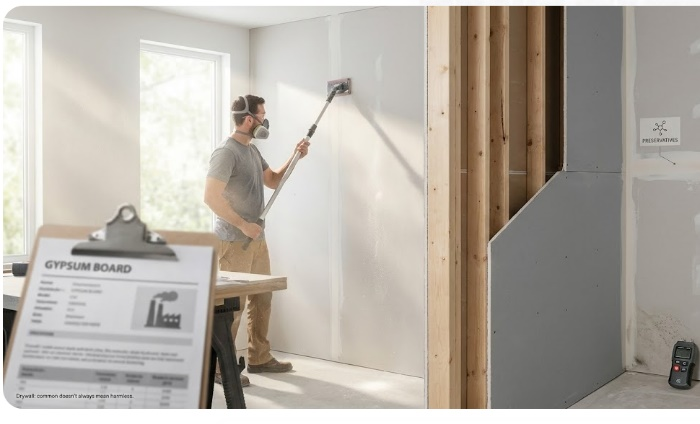
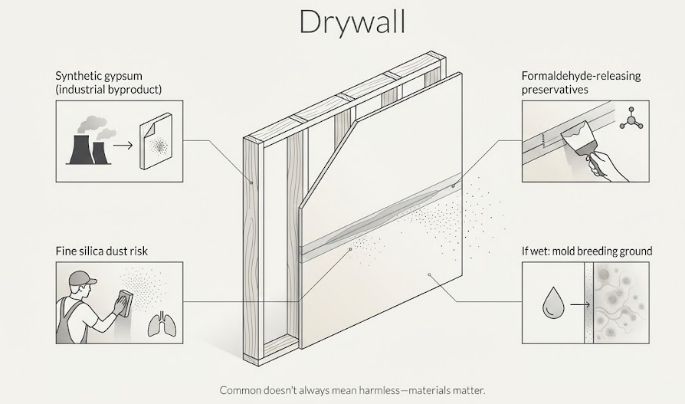
The most common interior finish in North America. Most drywall today uses synthetic gypsum, a byproduct of coal power plants, and may contain trace heavy metals. The joint compound used to tape and finish it includes formaldehyde-releasing preservatives. It also produces fine silica dust when sanded—linked to serious lung disease. And if drywall ever gets wet, it becomes a breeding ground for toxic mold.
Paints & Primers
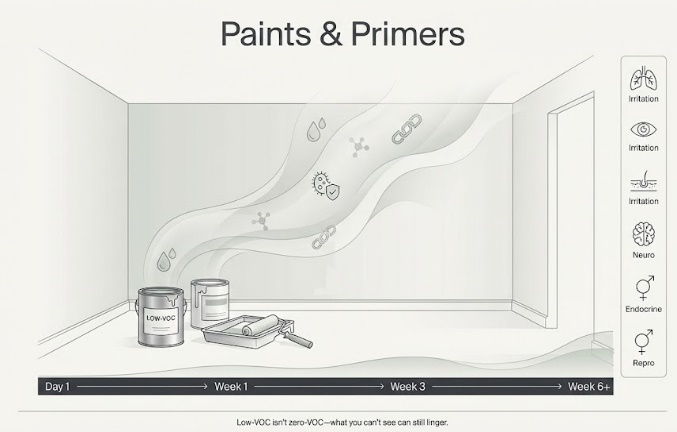
Even “low-VOC” paints often contain glycol ethers, biocides, and plasticizers. These compounds off-gas for weeks—or longer. Many of them are endocrine disruptors. Volatile Organic Compounds (VOCs) can irritate lungs, skin, and eyes, and have been linked to neurological and reproductive harm.
Insulation
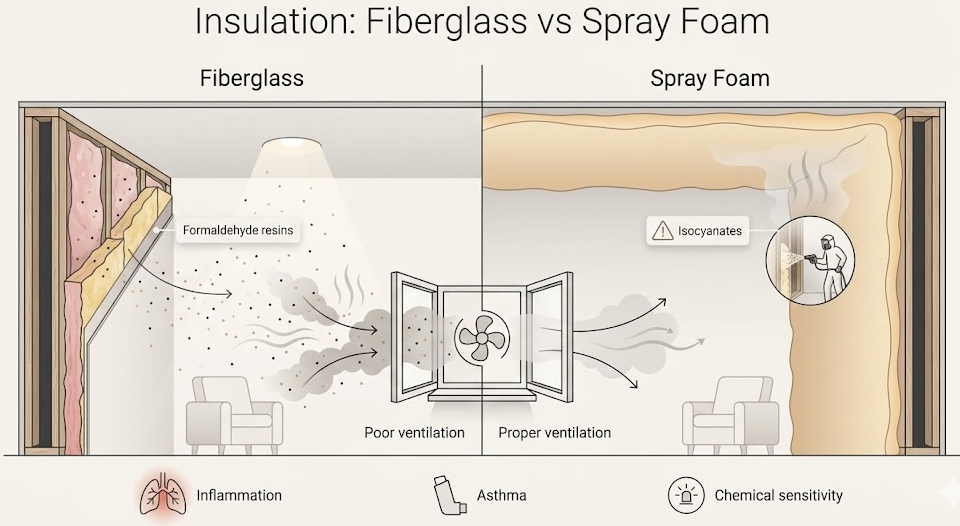
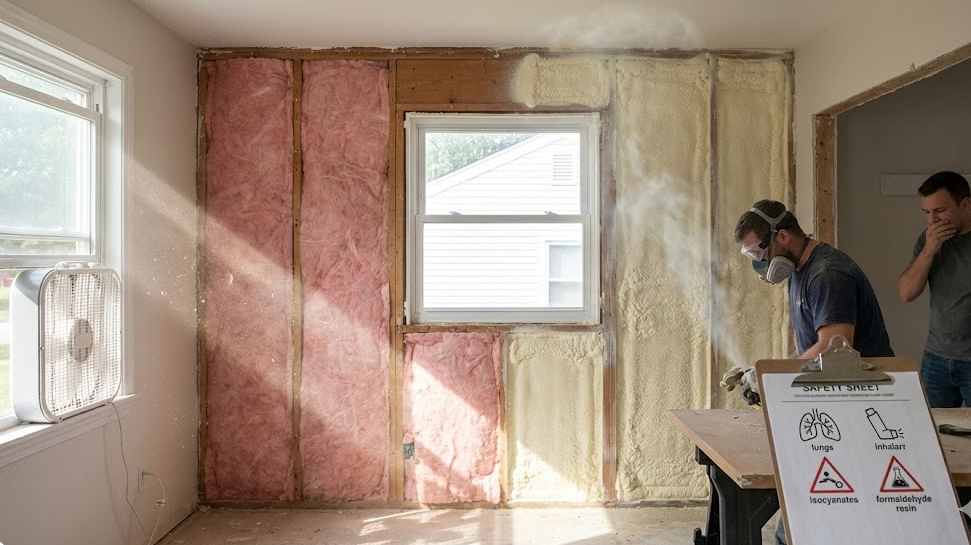
Fiberglass insulation is bound with formaldehyde resins and can release micro-particles into the air. Spray foam insulation contains isocyanates—one of the most toxic chemicals used in construction. These substances can cause respiratory inflammation, asthma, and long-term chemical sensitivity, especially when installed without proper ventilation.
Engineered Wood Products
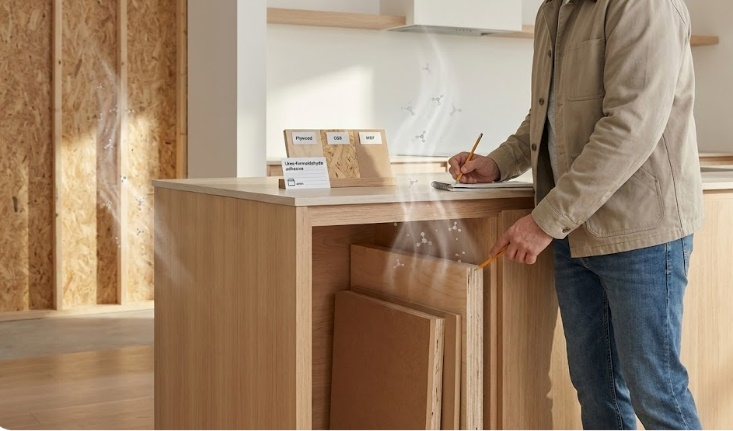
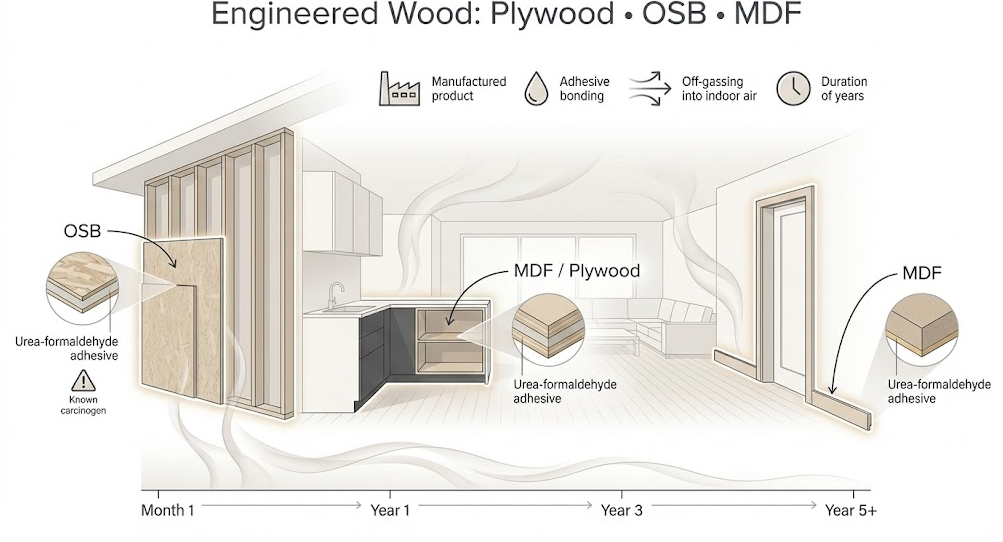
Plywood, OSB (oriented strand board), and MDF (medium-density fiberboard) are used throughout framing, cabinetry, and trim. These products are glued together with urea-formaldehyde, a known human carcinogen. The off-gassing can last for years.
Flooring
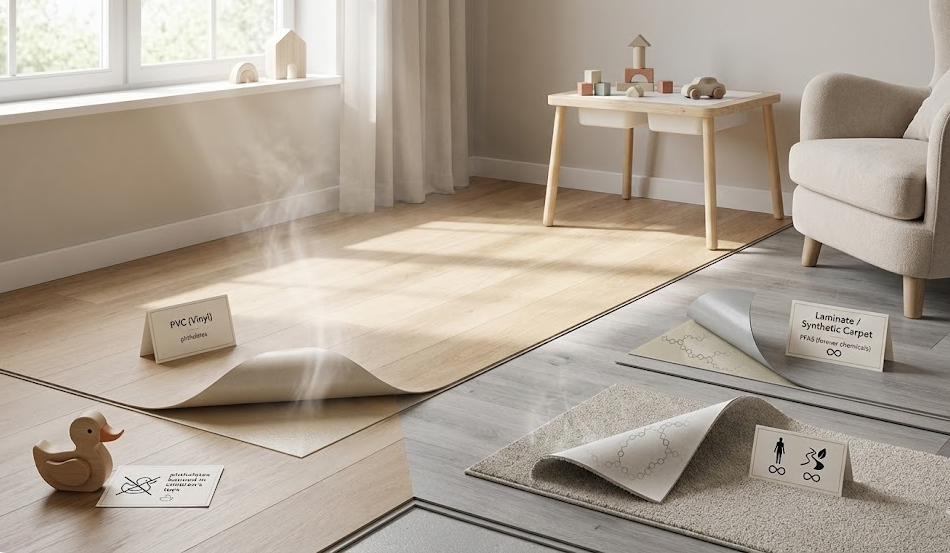
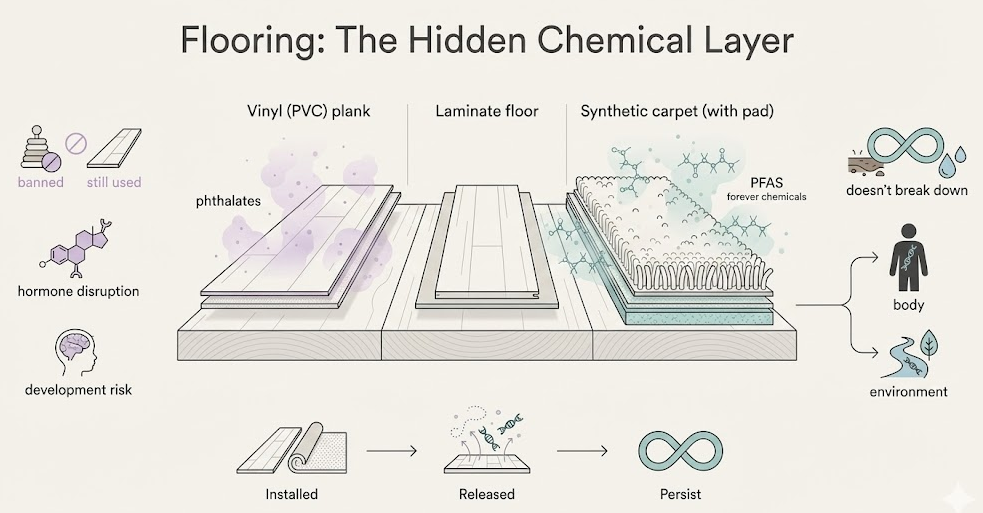
Vinyl (PVC) flooring contains phthalates—chemicals that have been banned from children’s toys but not from flooring. These disrupt hormones and are linked to developmental problems. Laminate floors and synthetic carpets often contain adhesives and stain repellents made from PFAS (“forever chemicals”), which do not break down in the body or the environment.
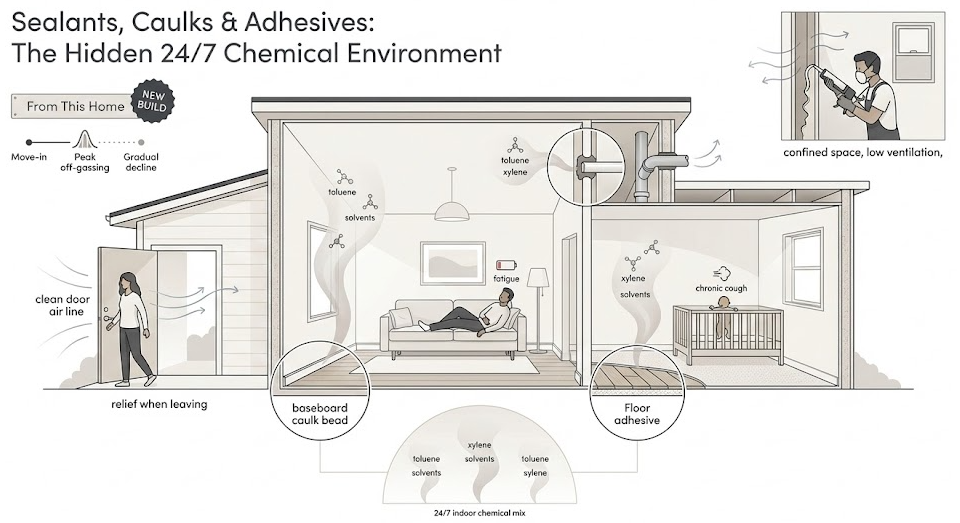
Sealants, Caulks & Adhesives
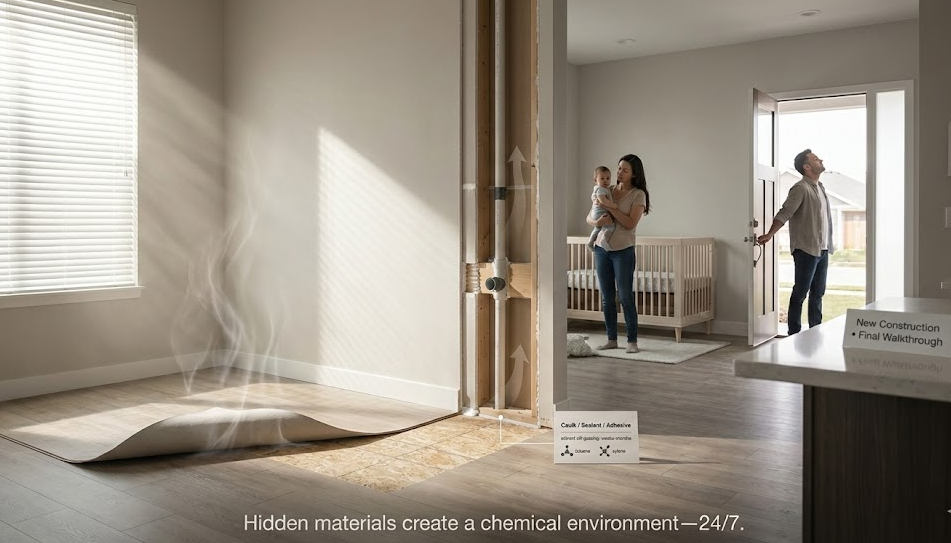
Hidden behind walls and under floors, these compounds emit toluene, xylene, and other solvents for weeks or months. Many are applied in confined spaces with little ventilation.
None of these materials alone might raise alarm bells. But taken together, they form a chemical environment that you live inside—24 hours a day, 7 days a week.
This is why people feel inexplicably tired at home. Why babies develop chronic coughs. Why do some people feel relief simply by leaving their house?
And these materials aren’t just in old homes. They’re in new construction, too. In fact, they’re often worse in new homes because the off-gassing is at its peak.
WHEN EFFICIENCY BECOMES SUFFOCATION
When we talk about homes being “tight,” most people think that’s a good thing.
Energy-efficient construction has popularized the idea that an airtight house is a better house—because it keeps the heat in and the weather out. And while it’s true that energy loss is a real concern, we’ve reached a dangerous tipping point: many of today’s homes are so tightly sealed that they no longer breathe.
And neither do the people living inside them.
A well-insulated, air-sealed building without proper ventilation becomes a trap. Moisture builds up. Chemical fumes from paints, plastics, and foams accumulate. Stale air stagnates in the rooms we spend the most time in—our bedrooms, our kitchens, our children’s play areas.
Without ventilation or the ability for vapor to escape through materials, toxins have nowhere to go.
The Breathability Problem
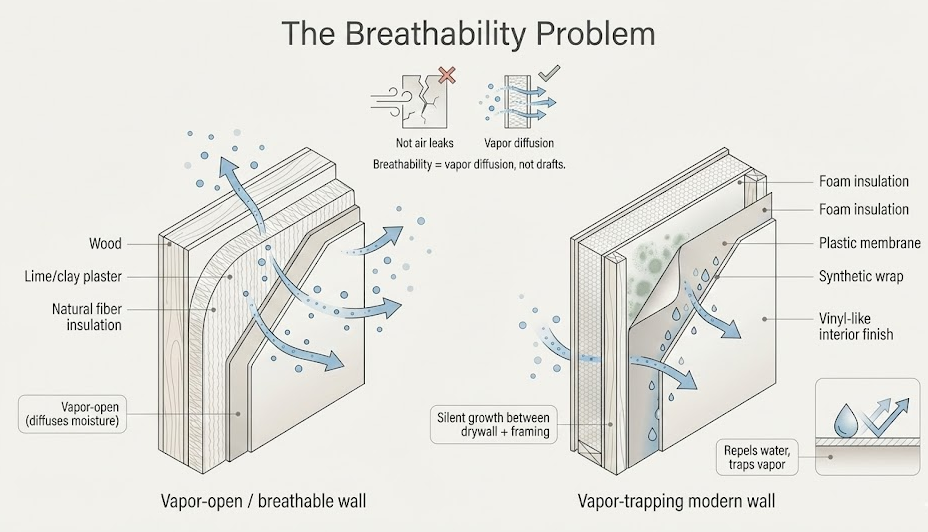
Breathability in building science doesn’t mean air leaking through cracks. It refers to a structure’s ability to manage vapor diffusion—to allow water vapor to pass through wall assemblies so moisture doesn’t get trapped and cause mold or material breakdown.
Natural materials like wood, lime, and clay have this quality. Plastics, foams, and synthetic membranes do not.
When moisture can’t escape, condensation forms inside walls. That’s when mold begins to grow—silently, invisibly—between your drywall and framing. Many synthetic building materials are hydrophobic but not vapor-open, meaning they repel water on the surface but trap vapor inside the wall cavity.
This is the unseen sickness of the modern home.
The Efficiency Illusion
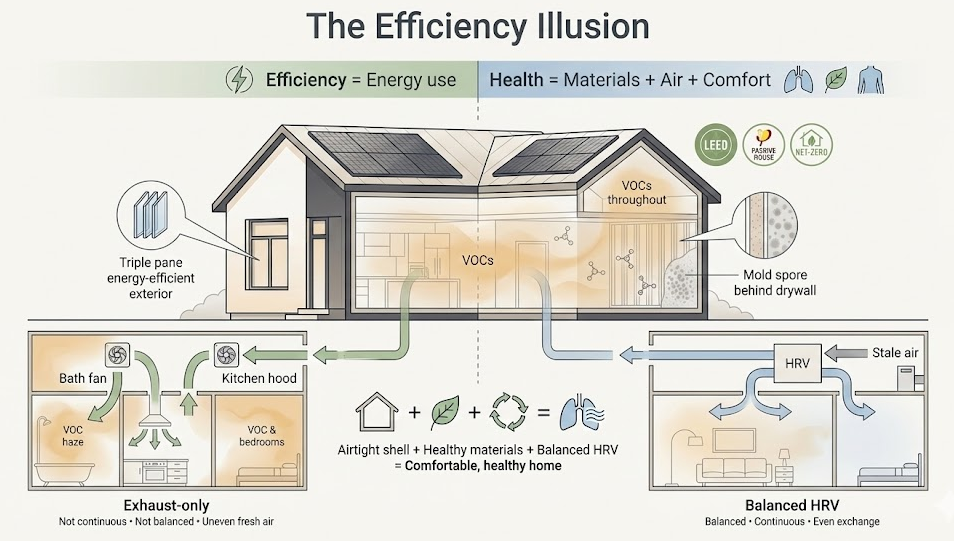
Homes built to high energy standards—LEED certified, Passive House, Net-Zero—can still be profoundly unhealthy. You can have triple-pane windows and solar panels and still live in a house with formaldehyde in the walls, mold behind the drywall, and VOCs trapped in the air.
Efficiency measures how much energy your home uses. It says nothing about the health of the materials, the quality of your air, or the comfort of your body.
Airtightness is only a virtue when paired with healthy, breathable materials and balanced mechanical ventilation—such as heat recovery ventilation (HRV) systems. Unfortunately, many homes rely on bath fans and kitchen hoods alone, which don’t run continuously and don’t exchange fresh air evenly throughout the house.
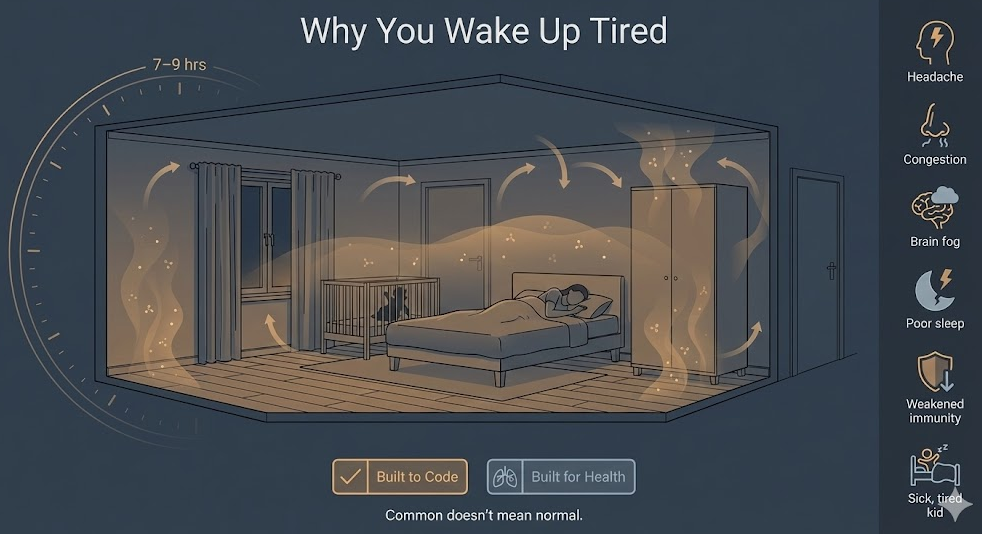
Why You Wake Up Tired
Have you ever woken up in your home and felt more exhausted than the night before? Headache. Congestion. Brain fog.
This isn’t normal—but it’s become common.
The cause is often indoor air quality. During sleep, you spend 7–9 hours in one closed room, inhaling whatever your walls, paint, flooring, and mattress are releasing into the air.
Poor sleep. Weakened immunity. Restless children. Your house may be the root cause. Not because it’s old or broken—but because it was built to code, not built for health.
YOUR BODY IS KEEPING SCORE
You don’t have to live next to a factory or drink contaminated water to be exposed to environmental toxins. For many people, the greatest exposure risk is right inside their home.
We spend more time indoors than ever before. And in that time, we breathe in, touch, and absorb the substances that surround us—many of which were never meant to be part of the human body.
The Symptoms of a Toxic Home
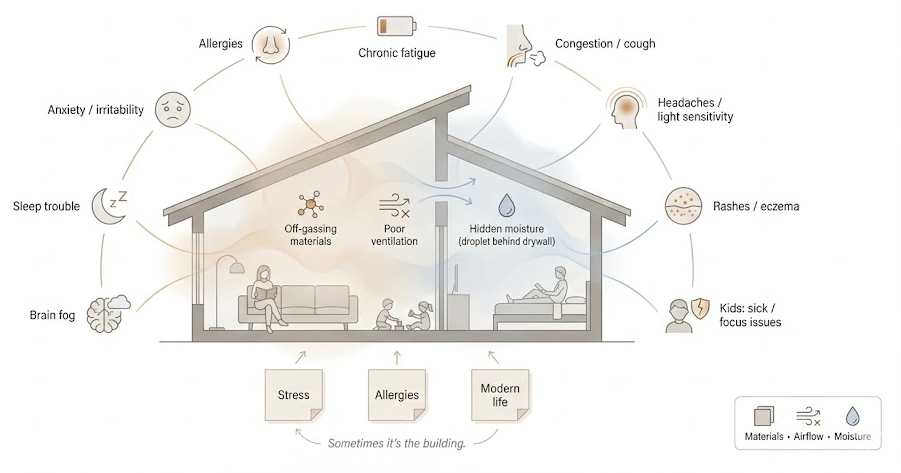
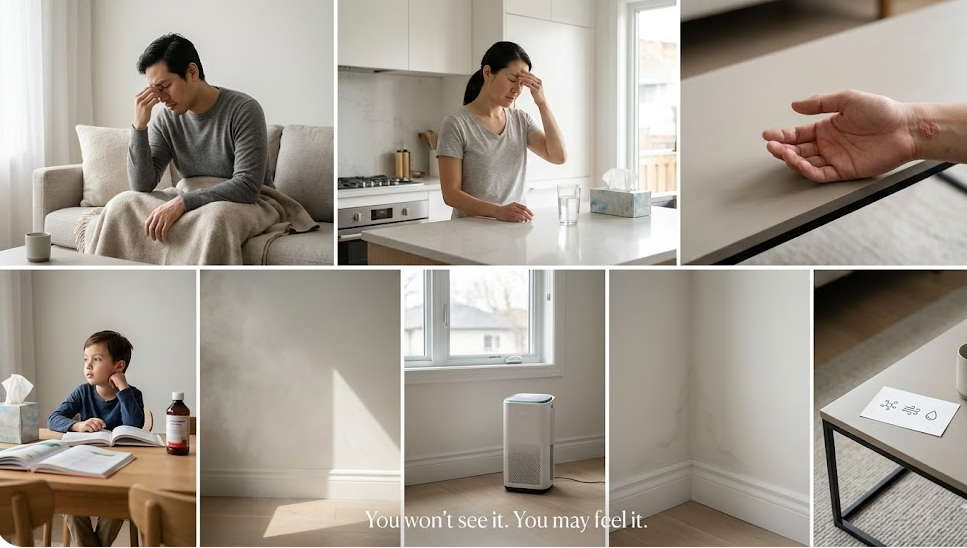
You won’t see the toxins. You won’t smell most of them. But you may feel them:
- Chronic fatigue that no amount of sleep resolves
- Sinus congestion or dry cough that lingers for months
- Frequent headaches or unusual light sensitivity
- Skin rashes or eczema that flare up indoors
- Mood changes like anxiety, irritability, or depression
- Trouble sleeping even in a dark, quiet room
- Brain fog, poor concentration, or forgetfulness
- Children who are constantly sick or struggling to focus
Often, these symptoms are written off as stress, seasonal allergies, or just part of modern life. But for many people, they are directly connected to the off-gassing materials, poor ventilation, and hidden moisture issues within their own walls.
The Science Behind the Suffering
Let’s break down what’s actually happening:
Formaldehyde: Found in engineered wood, insulation, and adhesives. It’s a known human carcinogen and respiratory irritant that can trigger symptoms even at low levels.
VOCs (Volatile Organic Compounds): A broad category that includes solvents, plasticizers, and preservatives found in paint, flooring, furniture, and sealants. Many VOCs are neurotoxic, hormone-disrupting, and respiratory irritants.
Phthalates: Common in vinyl products and synthetic fragrances. These chemicals interfere with hormone regulation and are linked to reproductive harm and developmental problems in children.
Isocyanates: Present in spray foam insulation and polyurethane products. Potent lung irritants and one of the leading causes of occupational asthma.
Mold Mycotoxins: When mold grows inside wall cavities or HVAC systems, it can release invisible toxins into the air. These can affect neurological, respiratory, and immune function—even when the mold itself isn’t visible.
Over time, your body can become sensitized to these exposures. What begins as minor symptoms can evolve into full-blown chemical sensitivity, chronic fatigue syndrome, or autoimmune disease. And while some people are genetically more sensitive than others, no one is immune to long-term exposure.
The Burden of Proof Problem
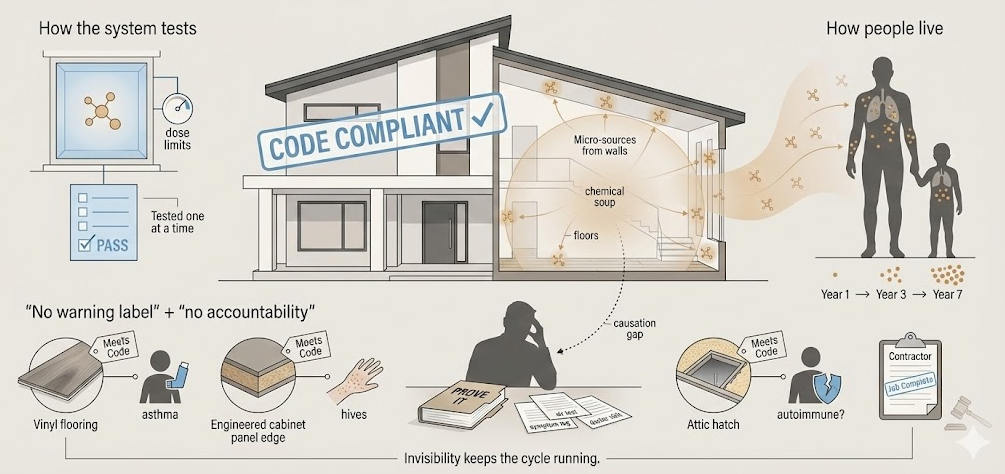
Here’s the cruel irony: Most building codes don’t account for cumulative exposure to toxins. Regulatory agencies test chemicals individually, and only at specific doses. But no one lives with just one chemical at a time. We live inside a chemical soup, where substances interact and accumulate in our bodies slowly, over years.
What’s worse: the burden of proof falls on the homeowner.
If your child develops asthma, there’s no warning label to trace it back to the vinyl flooring or formaldehyde-laced cabinets. If you start waking up with unexplained hives, the contractor won’t be held accountable for the spray foam in the attic. If you’re diagnosed with an autoimmune disorder after moving into a new home, good luck proving causation.
This invisibility is what allows the system to continue unchecked.
THE GREENWASHING TRAP
Walk into any big-box home store or browse a contractor’s website and you’ll see words like:
“Eco-friendly.”
“Sustainable.”
“Low-VOC.”
“Green-certified.”
These phrases are designed to reassure you—to make you feel good about your choices. But more often than not, they’re just that: phrases. Marketing language. A way to sell the same harmful materials with prettier packaging.
Welcome to the world of greenwashing.
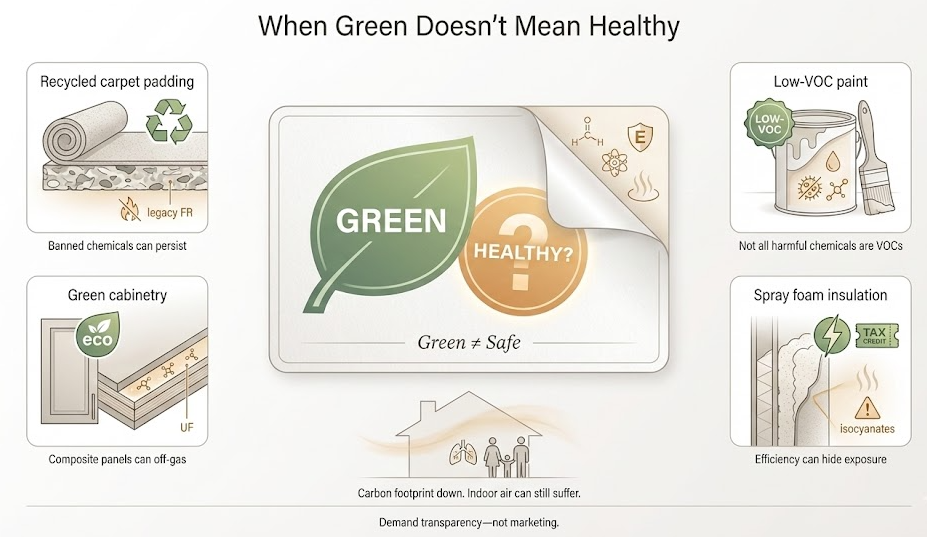
When Green Doesn't Mean Healthy
The construction industry has embraced sustainability—but not necessarily health. That’s a crucial distinction.
A product may be labeled “green” because it’s made with recycled content, is energy-efficient, or complies with certain manufacturing standards. But that same product might still contain endocrine disruptors, formaldehyde, or off-gas toxic chemicals for years after installation.
Real examples:
- Recycled carpet paddingmade from old foams may be loaded with legacy flame retardants that are now banned—but still present in recycled materials.
- Low-VOC paintsmay still contain glycol ethers, preservatives, and fungicides that aren’t regulated as VOCs but are equally harmful.
- “Green” cabinetrymay use composite wood panels bound with urea-formaldehyde—the same carcinogen found in conventional products.
- Spray foam insulationmay dramatically reduce your heating bill and earn you tax credits—while simultaneously releasing isocyanates and amine catalysts during and after installation.
These products may help lower your home’s carbon footprint. But they can still poison the air your family breathes every single day.
The truth is this: green does not equal safe. And until we demand transparency—not just marketing—the toxic cycle will continue.
A DIFFERENT WAY FORWARD
So what do we do? Give up and live in a tent?
No. But we need to fundamentally rethink how we build, renovate, and live.
The solution isn’t just about swapping one product for another. It’s about understanding materials, demanding transparency, prioritizing human health alongside environmental sustainability, and choosing builders and architects who see the home as more than a commodity.
Here’s what that looks like in practice:
- Choose Natural, Time-Tested Materials
- Solid wood instead of engineered composites
- Natural plasters (lime, clay) instead of synthetic drywall compounds
- Mineral-based paints instead of acrylic or latex
- Cork, linoleum, or hardwood instead of vinyl or laminate
- Wool, cellulose, or wood fiber insulation instead of fiberglass or spray foam
- Prioritize Vapor Permeability
- Design wall assemblies that can dry out
- Avoid plastic vapor barriers that trap moisture
- Use breathable materials that manage humidity naturally
- Ventilate Intentionally
- Install continuous mechanical ventilation (HRV or ERV systems)
- Don’t rely on intermittent exhaust fans alone
- Ensure fresh air reaches every room, especially bedrooms
- Demand Ingredient Disclosure
- Ask manufacturers what’s actually in their products
- Request Safety Data Sheets (SDS) and third-party test results
- Don’t accept “proprietary formula” as an answer when it comes to your family’s health
- Test Your Home
- Conduct indoor air quality testing
- Check for mold, VOCs, formaldehyde
- Monitor humidity levels (ideal: 30-50%)
- Consider hiring a building biologist for a comprehensive assessment
- Renovate with Caution
- Remove materials carefully to avoid releasing trapped toxins
- Ventilate heavily during and after construction
- Allow new materials to off-gas before occupying renovated spaces
- Consider moving out temporarily during major renovations
- Vote with Your Wallet
- Support companies that prioritize health transparency
- Choose architects and builders trained in healthy building practices
- Advocate for stronger regulations and material testing standards
THE HOME YOU DESERVE

We’ve been living inside a decades-long experiment—one where profit and convenience trumped human health. But the experiment is failing. Our bodies are telling us the truth our regulations have ignored.
You deserve a home that restores you, not one that depletes you.
Your children deserve to breathe air that nourishes their growing bodies, not air laden with carcinogens and endocrine disruptors.
Your bedroom should be a sanctuary—not a gas chamber with curtains.
This isn’t about perfection. It’s about awareness. It’s about asking better questions. It’s about demanding that the people who design, build, and regulate our homes finally put human health at the center of their decisions.
Because here’s the truth they don’t want you to know: we already have the materials, the knowledge, and the technology to build homes that don’t make us sick. Natural materials have been used for thousands of years. Traditional building techniques understood breathability long before we had the science to explain it. We don’t need to invent anything new—we just need to remember what we forgot in our rush toward convenience.
The modern home doesn’t have to be toxic. But it won’t change until we—as homeowners, parents, and citizens—stop accepting “safe enough” and start demanding truly safe.
Your home is where your life happens. Where your children take their first steps. Where you recover from illness. Where you dream, create, rest, and love.
It should be the safest place you know.
Not a slow poison dressed up as the American Dream.
FURTHER READING & RESOURCES
Books
“The Healthy Home: Simple Truths to Protect Your Family from Hidden Household Dangers” by Myron Wentz, Ph.D. and Dave Wentz
A comprehensive guide to identifying and eliminating toxins in your living environment.
“Prescriptions for a Healthy House: A Practical Guide for Architects, Builders & Homeowners” by Paula Baker-Laporte, Erica Elliott, and John Banta
The definitive manual for designing and building homes that support human health.
“The Non-Toxic Avenger: What You Don’t Know Can Hurt You” by Deanna Duke
One woman’s eye-opening journey to eliminate toxins from her home and life.
“The Humanure Handbook: A Guide to Composting Human Manure” by Joseph Jenkins
While focused on composting, this book explores broader themes of natural systems and sustainable living.
“Building Biology: A Holistic and Ecological Building Science” by Anton Schneider
An in-depth exploration of how buildings affect human health and the principles of building biology.
“Better Basics for the Home: Simple Solutions for Less Toxic Living” by Annie Berthold-Bond
Time-tested formulas for creating a healthier home environment.
Organizations & Certifications
International Institute for Building-Biology & Ecology (IBE)
https://buildingbiology.net
Training and certification for building biology professionals; maintains a directory of practitioners.
Healthy Building Network
https://healthybuilding.net
Advocates for healthier building materials and maintains the Pharos Project, a database of building product ingredients.
Environmental Working Group (EWG)
https://www.ewg.org
Research and advocacy organization with databases on toxic chemicals in consumer products.
American Lung Association – Indoor Air Quality
https://www.lung.org/clean-air/at-home
Evidence-based information on indoor air pollutants and health effects.
Green Science Policy Institute
https://greensciencepolicy.org
Research on toxic chemicals in consumer products, particularly flame retardants and PFAS.
Cradle to Cradle Products Innovation Institute
https://www.c2ccertified.org
Certification program for products designed with human and environmental health in mind.
Living Building Challenge
https://living-future.org/lbc
The most rigorous green building standard, including a “Red List” of toxic materials to avoid.
Testing & Assessment Resources
American Indoor Air Quality Council (AmIAQ)
https://amiaq.org
Find certified indoor air quality professionals for home testing.
GREENGUARD Certification
https://www.ul.com/resources/greenguard-certification-program
Third-party certification for low-emitting products.
Material Databases
Pharos Project
https://www.pharosproject.net
Searchable database of building product ingredients and health impacts.
Declare Label
https://living-future.org/declare
Ingredient transparency label for building products (like a nutrition label for materials).
HomeFree Database
https://www.homefree.org
Search for products free from harmful chemicals.
Documentary Films
“Unacceptable Levels” (2013)
Explores the pervasive presence of toxic chemicals in our daily lives and environments.
“Stink!” (2015)
Investigates the toxic chemicals in everyday consumer products and the industry’s lack of transparency.
“Building Biology: Creating Healthy Homes” (Multiple episodes available online)
Short educational videos on building biology principles and practices.
Government Resources
EPA Indoor Air Quality Homepage
https://www.epa.gov/indoor-air-quality-iaq
Federal guidelines and resources on indoor air pollutants.
California Proposition 65 List
https://oehha.ca.gov/proposition-65
List of chemicals known to cause cancer or reproductive harm (stricter than federal standards).
OSHA Hazard Communication Standard
https://www.osha.gov/hazcom
Access Safety Data Sheets (SDS) for construction products and chemicals.
Healthy Building Professionals
Building Biology Institute – Find a Professional
https://buildingbiologyinstitute.org/find-an-expert
Directory of certified building biologists, EMF consultants, and healthy home professionals.
American Institute of Architects – Committee on the Environment
https://www.aia.org/topic/sustainable-design
Find architects trained in sustainable and healthy design.
My Chemical-Free House Blog
https://www.mychemicalfreehouse.net
Personal blog documenting one woman’s journey to build a chemical-free home.